

Saronic Gulf Yacht Charter
The easiest sailing in Greece from Athens. Poros, Hydra, Spetses, and Aegina sit within a few hours of Alimos Marina — short hops, sheltered water, and light wind that rarely exceeds Force 5. Car-free islands, pistachio groves, and elegant stone harbours. The Saronic is the best choice if you're new to chartering, sailing with a family, or want to start and end in Athens without a long first passage.
The Classic Saronic Loop (7 Days)
Starting and ending at Alimos Marina, Athens. Distances are nautical miles; sail times assume an average cruising speed of 6 kn. Every leg is under 4 hours — the shortest hops of any Greek charter area.
| Day | Route | Distance (nm) | Hours Under Sail | What to See Ashore |
|---|---|---|---|---|
| Day 1 | Athens (Alimos) → Aegina | 18 | 3 | Temple of Aphaia, pistachio groves, fish tavernas at Perdika. The closest island to Athens. |
| Day 2 | Aegina → Poros | 22 | 3.5 | Poros Town — a pretty harbour clock tower, lemon groves, and the Temple of Poseidon ruins above the town. |
| Day 3 | Poros → Hydra | 18 | 3 | Car-free Hydra Town — stone mansions, no cars or motorbikes, donkeys for transport. A truly unique Greek island. |
| Day 4 | Hydra → Spetses | 12 | 2 | Spetses Town, the Museum of Bouboulina (female naval hero of the 1821 revolution), pine-fringed coves for swimming. |
| Day 5 | Spetses → Epidavros | 25 | 4 | Ancient theatre of Epidavros (4th century BC, acoustics that still amaze), quiet fishing village, swimming in the bay. |
| Day 6 | Epidavros → Angistri → Aegina | 18 | 3 | Swim stop at Angistri — a tiny pine-covered island with crystal water — then back to Aegina for the night. |
| Day 7 | Aegina → Athens (Alimos) | 18 | 3 | Short morning sail back. Pass Cape Sounion and the Temple of Poseidon on the way — one of Greece's most photographed sites. |
This route works in any wind direction — the Saronic islands sit in the lee of the Peloponnese, so even when the Meltemi blows in the Cyclades the Saronic stays manageable. If you have extra time, add Methana (a volcanic peninsula with hot springs) or Nafplio on the Peloponnesian coast.
Wind and Season
The Saronic is the most sheltered sailing area in Greece. If the Cyclades Meltemi sounds intimidating, this is where to go.
The Saronic Wind
A gentle north or north-east wind at Force 3–5 blows through the season, and when the Meltemi does reach the Saronic it is significantly moderated by the Peloponnese landmass. Afternoon sea breezes from the south are common in July and August — light and predictable. The only wind to watch is a strong southerly, which can make the open crossing from Spetses back toward Poros uncomfortable. Otherwise, this is the easiest big-boat sailing in Greece.
When to Go
May–June: ideal — warm, quiet, green, and the harbours have space. July–August: hot and busier but the wind stays manageable — the Saronic is a safe peak-season choice when the Cyclades are Meltemi-bound. September: warm water, light wind, fewer crowds, and lower prices. October: still possible and very quiet, though the days are shorter and some tavernas close.
Why Choose the Saronic
Short passages (2–4 hours), no open-water crossings longer than 25 nm, shelter from the Meltemi, and some of the most distinctive islands in Greece — Hydra has no cars, Spetses is pine-covered, and Aegina grows the best pistachios in the country. Plus you start and end in Athens, with its airport, Acropolis, and restaurants. The most convenient charter base in Greece.
Saronic vs. the Other Areas
If you're deciding between the four main charter areas, here's how the Saronic compares.
Saronic vs. Ionian
Both are gentle, but the Saronic starts from Athens (easier flights) while the Ionian starts from Corfu or Lefkada. The Ionian has greener islands and the Paxos–Antipaxos highlight; the Saronic has Hydra and Epidavros. Choose the Saronic for convenience and ancient sites; the Ionian for lush island-hopping.
Saronic vs. Cyclades
The Saronic is the Cyclades' gentler cousin — same base in Athens, but without the Meltemi risk, open crossings, or weather days. You trade the iconic white-and-blue landscape for stone harbour towns and pine islands. If you want Cyclades scenery without Cyclades wind, the Cyclades in June is manageable — but the Saronic is the safe year-round choice.
Saronic vs. Sporades
The Sporades are further north and wilder — denser forests, more isolated beaches, and a slightly longer passage from Volos. The Saronic is more accessible and more sheltered. Choose the Sporades for off-the-beaten-path island scenery; the Saronic for the easiest family charter in Greece.
What a Saronic Charter Costs
Indicative pricing for a 40-foot monohull, one week, mid-season (June or September). The Saronic is mid-range — cheaper than the Cyclades, comparable to the Ionian.
| Item | Indicative Cost (€) |
|---|---|
| Yacht charter (7 days, mid-season) | 2,200–3,500 |
| End-cleaning (one-off) | 120–180 |
| Fuel (7 days, short hops, light motoring) | 100–200 |
| Mooring fees (town quays, 6 nights) | 80–200 |
| Marina berth (Alimos, 2 nights) | 140–220 |
| Provisioning (food & drink, 4 guests) | 300–500 |
| Skipper (if needed, 7 days) | 1,050–1,400 |
| Outboard tender + SUP (optional) | 80–120 |
Mooring in the Saronic is inexpensive — Hydra and Spetses town quays are free or low-cost, and Aegina and Poros charge modest fees. The main mooring cost is Alimos Marina at the start and end. Fuel is low because the distances are short.
Boats That Sail the Saronic
These yachts from our fleet are available for Saronic charters, starting from Alimos Marina, Athens. Click through for full specifications and seasonal pricing.

Bareboat Monohull (36–42 ft)
3 cabins, 6 guests. A 36 ft yacht is sufficient for the Saronic — the passages are short and the water is calm. Requires an ICC or equivalent licence. A great first bareboat charter.
View boat & pricing →
Skippered Cruiser (42 ft)
3 cabins, 6 guests. Comes with a local skipper who knows the Saronic harbours and the best swimming coves. Ideal if you want to relax and not worry about docking stern-to on Hydra's busy quay.
View boat & pricing →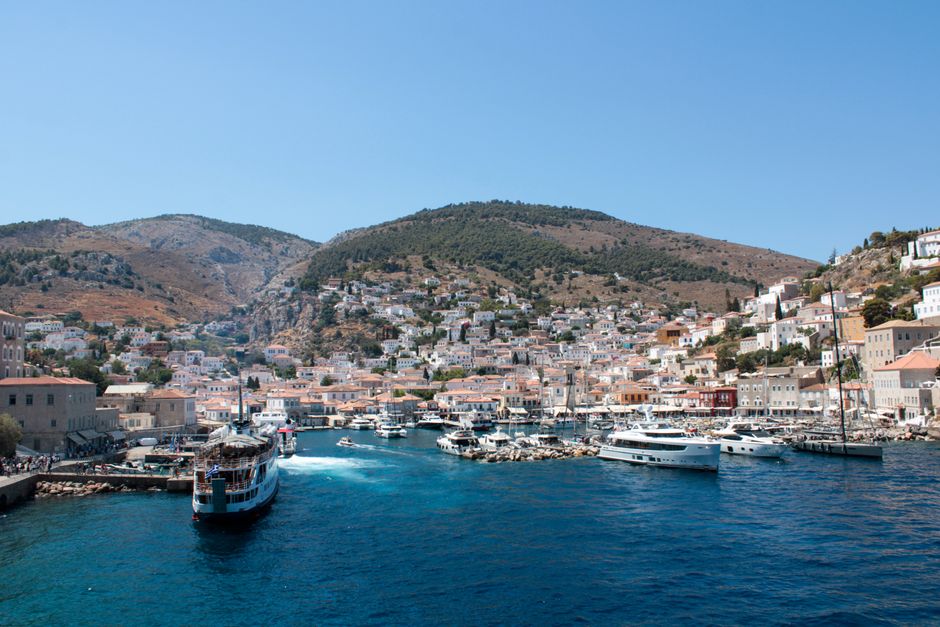
Catamaran (38 ft)
4 cabins, 8 guests. Space and stability for families and larger groups. The shallow draft lets you anchor close to the swimming coves at Spetses and Angistri. More expensive but the comfort is worth it for a relaxed week.
View boat & pricing →Saronic Charter FAQs
Is the Saronic good for a first-time bareboat charter?
Yes — it's arguably the best area in Greece for a first bareboat charter. Short hops (2–4 hours), sheltered water, light wind, and no tidal range. You start and end at Alimos Marina in Athens, which is easy to reach by flight and taxi. A 36 ft yacht is enough, and an ICC or RYA Day Skipper licence covers the requirement. If you've never chartered before, start here.
Can I do the Saronic in peak season (July–August)?
Yes — and this is one of the Saronic's biggest advantages. While the Cyclades can be Meltemi-bound in July and August, the Saronic stays manageable thanks to the Peloponnese shielding it from the north wind. It will be hotter and busier, and Hydra's quay fills up early, but you won't be stuck in port for days. Book early for peak season — Alimos is the busiest marina in Greece.
What's special about Hydra?
Hydra is car-free and motorbike-free — the only transport is donkeys and your own feet. The town is a preserved 18th-century settlement of stone captain's mansions rising from a crescent harbour. No building is allowed to break the historic character. It's one of the most distinctive islands in Greece and a highlight of any Saronic charter. Arrive before 16:00 in peak season to get a spot on the town quay.
How far is Alimos Marina from Athens airport?
About 45 minutes by taxi (approx. €40–€50) or 60 minutes by metro (Line 3 to Syntagma, transfer to Line 2 to Alimos station, then a 10-minute walk or short taxi ride). We recommend a taxi if you're carrying luggage and arriving late. Alimos has fuel, chandlery, provisioning stores, and several restaurants on-site.
Can I combine the Saronic with the Cyclades in one charter?
Yes, but you'll need at least 10–14 days. The Saronic and Cyclades are separated by a 30–40 nm open-water crossing from Poros or Spetses to Kea or Kythnos. In a 7-day charter, stick to one area. In a 10-day charter, you can do the Saronic loop then cross to the northern Cyclades (Kea, Kythnos, Syros) before returning to Athens. Check the Meltemi forecast before crossing — the open passage is exposed to north wind.
Are there flotillas in the Saronic?
Yes, particularly in July and August — the Saronic is a popular flotilla area because of its easy conditions. Flotillas tend to moor at Hydra, Spetses, and Poros in the late afternoon. Arrive by 15:00–16:00 to secure a spot, or anchor in a nearby bay and go ashore by tender. In June and September, flotillas are far less common and the quays are quieter.
Ready to Sail the Saronic?
Tell us your dates, group size, and preferred boat — we'll match you with the right yacht and route from Athens.
Request a Quote